If you've typed "Cessna 152 vs 172 MSFS" into a search bar, you're standing where most new simmers stand: two very similar-looking trainers, one obvious size difference, and no idea which one actually teaches you more. Real flight schools have argued this for decades. Here's how the difference plays out once you're the one at the controls, on a screen instead of a ramp.
The size difference is the whole story
A 152 is a two-seat aircraft with a gross weight around 1,670 lb. A 172 is a four-seater at roughly 2,450 lb, carrying nearly 800 lb more airframe, fuel and payload on a similar wing. It isn't just a spec sheet number: it's the reason everything else about how the two aircraft fly is different.
Less mass means the 152 gets pushed around more. Crosswind gusts, wake turbulence, your own ham-fisted control inputs: the 152 reacts to all of it faster and more visibly than the 172 does. Flight schools have used it for primary training for fifty years precisely because of that, not despite it. It shows you your mistakes immediately, before they turn into habits.
Handling: twitchy versus settled
Fly the 152 in MSFS and the first thing you'll notice is how quickly it responds to rudder and aileron input. It rewards precision and punishes a heavy hand. Over-correct on final and you'll see the result straight away, which is uncomfortable at first and genuinely useful once it clicks.
The 172 is calmer. The extra weight and slightly larger tail give it more natural stability, so small input errors get absorbed rather than amplified. It's a more forgiving aircraft to fly badly, which sounds like a good thing for a beginner, but it can also let sloppy technique go unnoticed for longer, because the aircraft is quietly correcting for you.
Cockpit workload
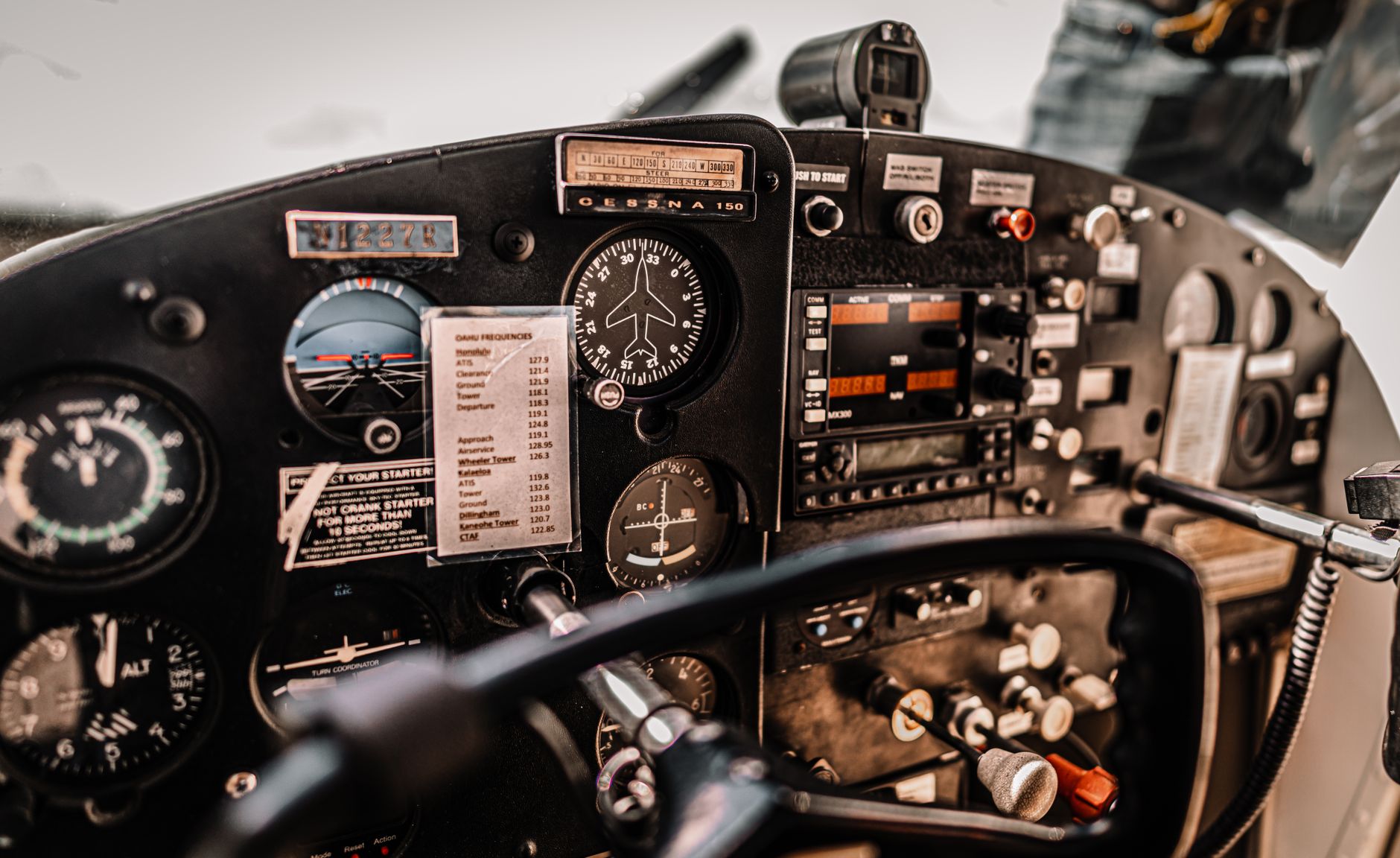
The 152 panel is deliberately basic: six-pack instruments, minimal switches, nothing to manage beyond flying the aircraft. That makes it a good place to learn checklist discipline without the panel itself being the thing you're learning.
The 172 usually carries more: a second nav radio, an autopilot in later models, sometimes a glass panel depending on the variant you're flying. None of it is complicated, but it's more to scan, more to configure before start-up, and more that can go wrong if you skip a step. If you want cockpit flows to be the whole lesson, start with the 152. If you want a taste of managing systems the way you would in a bigger aircraft, the 172 gets you there sooner.
Which one should you actually pick first?
If your goal is stick-and-rudder feel, learning to actually fly the aeroplane and feel every gust and every clumsy input, start with the 152. It's a less comfortable teacher and a better one for exactly that reason.
If your goal is comfort and confidence while you get used to procedures, checklists and basic navigation, the 172's extra stability buys you room to think without the aircraft constantly demanding correction. Most people who fly both end up preferring the 172 for cross-country flying and the 152 for pure handling practice. There's no wrong answer here, just a different lesson each one teaches.
- Seats2 / 4
- Gross weightABOUT 1,670 LB / ABOUT 2,450 LB
- HandlingQUICK TO RESPOND / CALMER, MORE STABLE
- PanelBASIC SIX-PACK / MORE TO SCAN
- Best forSTICK AND RUDDER / PROCEDURES, CROSS-COUNTRY
Whichever you pick, fly it by the checklist
The aircraft matters less than the habit. New simmers who skip the checklist and "just fly" tend to plateau fast, because they never build the muscle memory that makes an aircraft feel predictable. Run the same flow every time (pre-start, before-takeoff, before-landing) in either type, and the differences above stop being confusing and start being useful information.
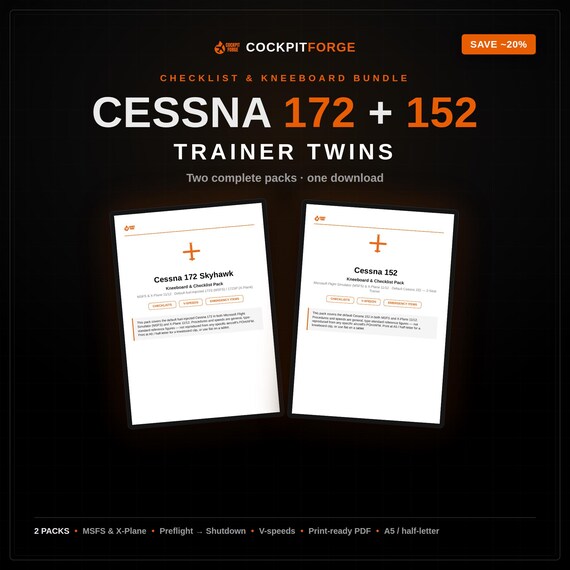
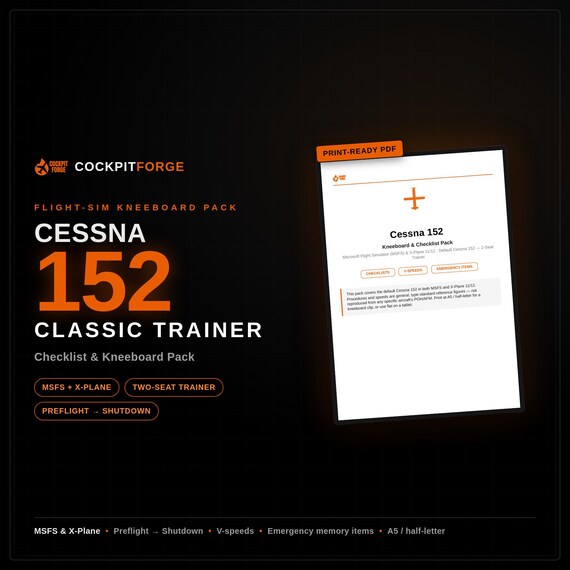
That's the thinking behind our Cessna 152 and Cessna 172 checklist and kneeboard packs: full normal and emergency flows and V-speeds for each type, so you can run the aircraft properly from day one instead of guessing at the order. If you're planning to fly both, as most people eventually do, the Trainer Twins bundle covers them together for less than buying separately.
Have a browse of the CockpitForge shop if you fly one of these types and fancy a proper kneeboard to go with it.