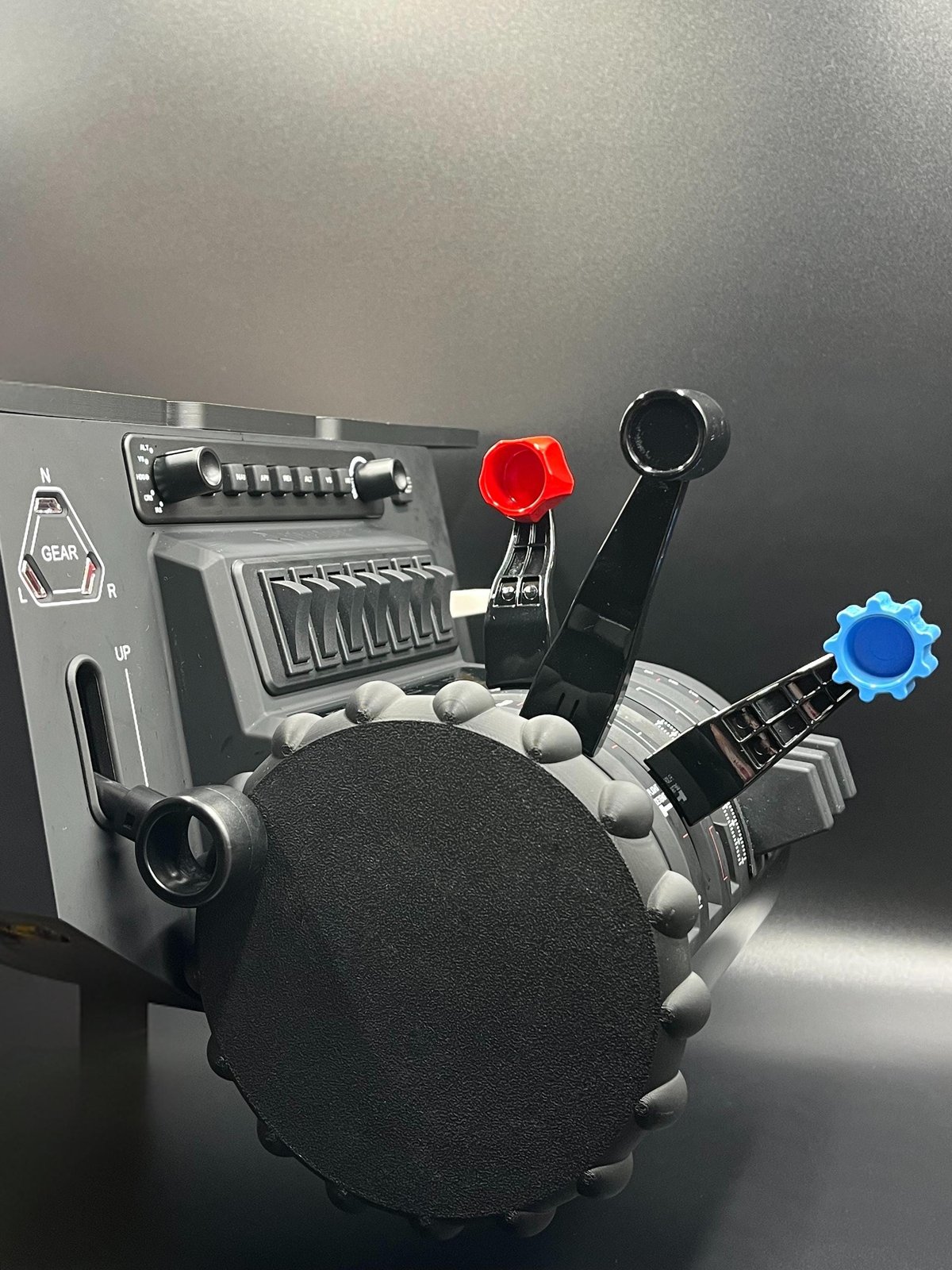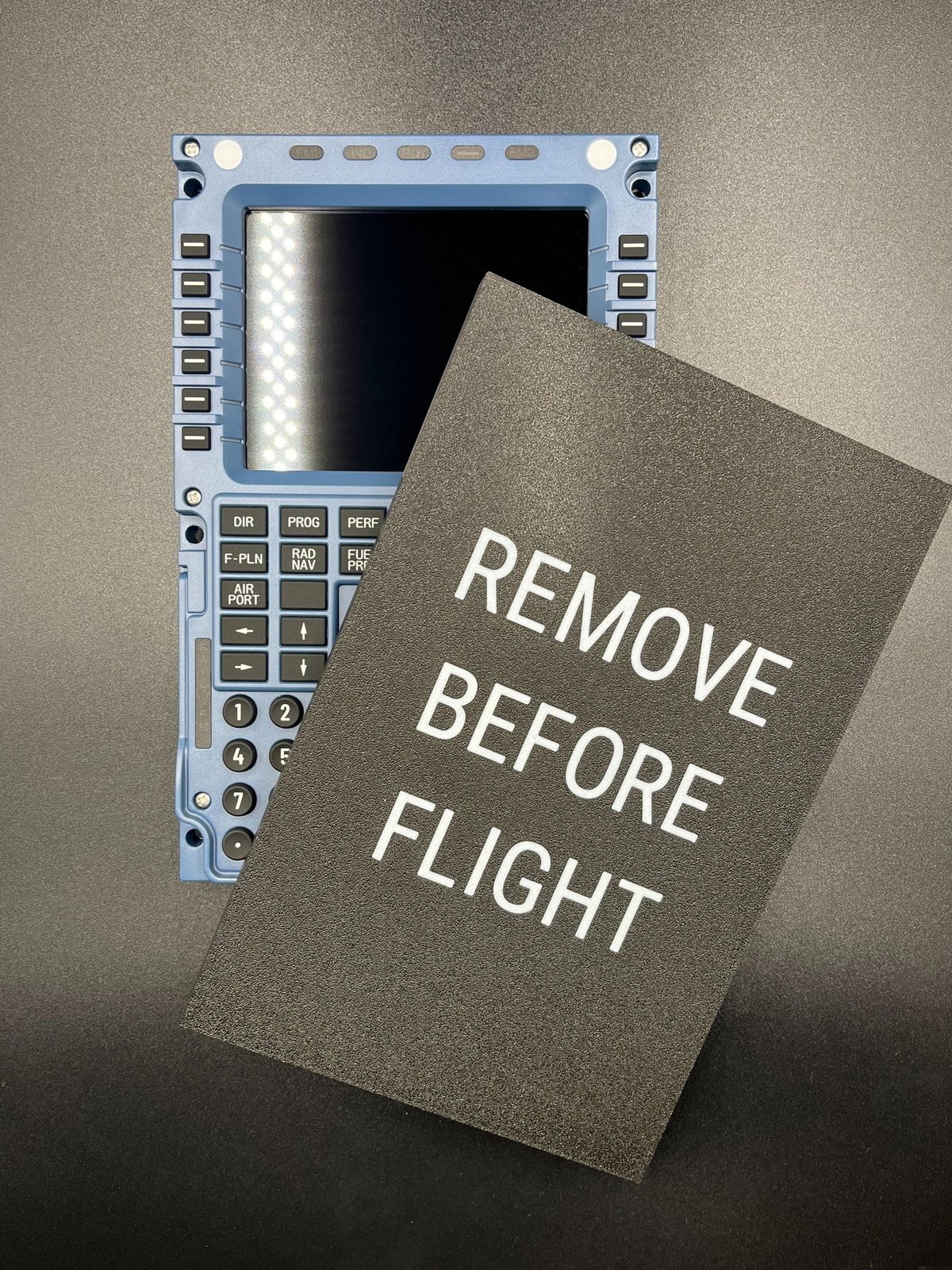
Search "are 3D-printed cockpit accessories durable" and you'll find two camps: people convinced anything off a 3D printer is a toy that'll snap in a month, and people who've had the same printed trim wheel cover on their Honeycomb Bravo for two years without a thought. Both are half right, because the answer depends entirely on what the part is being asked to do.
The myth: "3D-printed means flimsy"
The stereotype comes from somewhere real. Cheap printers with bad settings produce brittle, warped parts: thin walls, low infill, a nozzle temperature that's off, and you get something that cracks the first time you look at it wrong. If your only experience of 3D printing is a dollar-store trinket, "flimsy" is a fair conclusion.
But that's a statement about print quality, not about the process itself. The same material and the same printer, set up properly and designed for the job, produce something you'd struggle to break by hand. The variable isn't whether a part was 3D printed. It's whether it was engineered for the load it'll actually carry.
What actually determines whether a printed part holds up
Wall thickness and infill matter more than most people assume. A part printed with thin walls and sparse infill to save material will flex and eventually fail; one printed with enough shell thickness for its job won't. Print orientation matters too: printed plastic is strongest along the layer lines and weaker across them, so a part designed and oriented with that in mind resists the kind of snap that gives 3D printing its bad name. And then there's the job itself. A dust cover or a trim wheel skin sits on a desk and gets handled gently a few times a session. That's a different job entirely from a load-bearing bracket under constant mechanical stress, and it's the mismatch between the two that causes most "3D-printed parts break" stories.
Where 3D printing genuinely falls short
PLA, the most common filament and what we print in, softens under sustained heat well below what other engineering plastics tolerate. Leave a printed part on a sunlit windowsill or next to a hot lamp for hours and it can warp. It's also more brittle than ABS or PETG under a sharp impact, so it's the wrong choice for anything that might get dropped or knocked hard.
If a part needs to be structural, load-bearing, or sat somewhere hot, 3D printing in PLA isn't the right tool. No amount of clever design changes that.
Where it's genuinely good
For desk-mounted cockpit accessories, the picture flips. A dust cover, a trim wheel cover, a panel surround: these sit at room temperature, take light handling, and benefit from what 3D printing is actually good at, which is precise, custom-fit geometry for a specific panel, made in small batches without the tooling cost injection moulding demands. That's the trade a lot of people miss when they write off the whole process. You're not comparing a printed part to a mass-produced one on durability alone; you're trading a bit of heat and impact tolerance for an exact fit and no minimum order of ten thousand units.
That's the calculation behind things like our Winwing / WINCTRL MCDU dust cover and the Honeycomb Bravo trim wheel covers: parts designed for the job they're actually doing on a desk, not oversold as something they're not.
- Walls and infillENOUGH FOR THE JOB
- Print orientationSTRONGEST ALONG THE LAYERS
- Sunny windowsill or hot lampPLA CAN WARP
- Sharp knocksPLA IS MORE BRITTLE
- Dust cover, trim wheel skinA GOOD JOB FOR PLA
- Load-bearing or hotWRONG TOOL
How we build ours
Everything we print is PLA, made to order in the UK, with wall thickness and orientation chosen for what the part touches and how it's handled, not the thinnest print that'll technically hold together. It won't survive a windowsill in July, and we wouldn't claim it will. It will survive years of being taken on and off a throttle quadrant or CDU panel, which is the actual job.
If you're eyeing up a printed accessory for your setup, ask the same two questions we ask before designing one: what does this part touch, and what's actually being asked of it? Get those right and "3D-printed" stops being a red flag and starts being just a manufacturing method, one with real strengths for this kind of low-stress, high-precision cockpit gear.
We design and print cockpit accessories to order in the UK. Have a look at the CockpitForge shop if you're after something that actually fits your panel.